
Robust.AI Blog
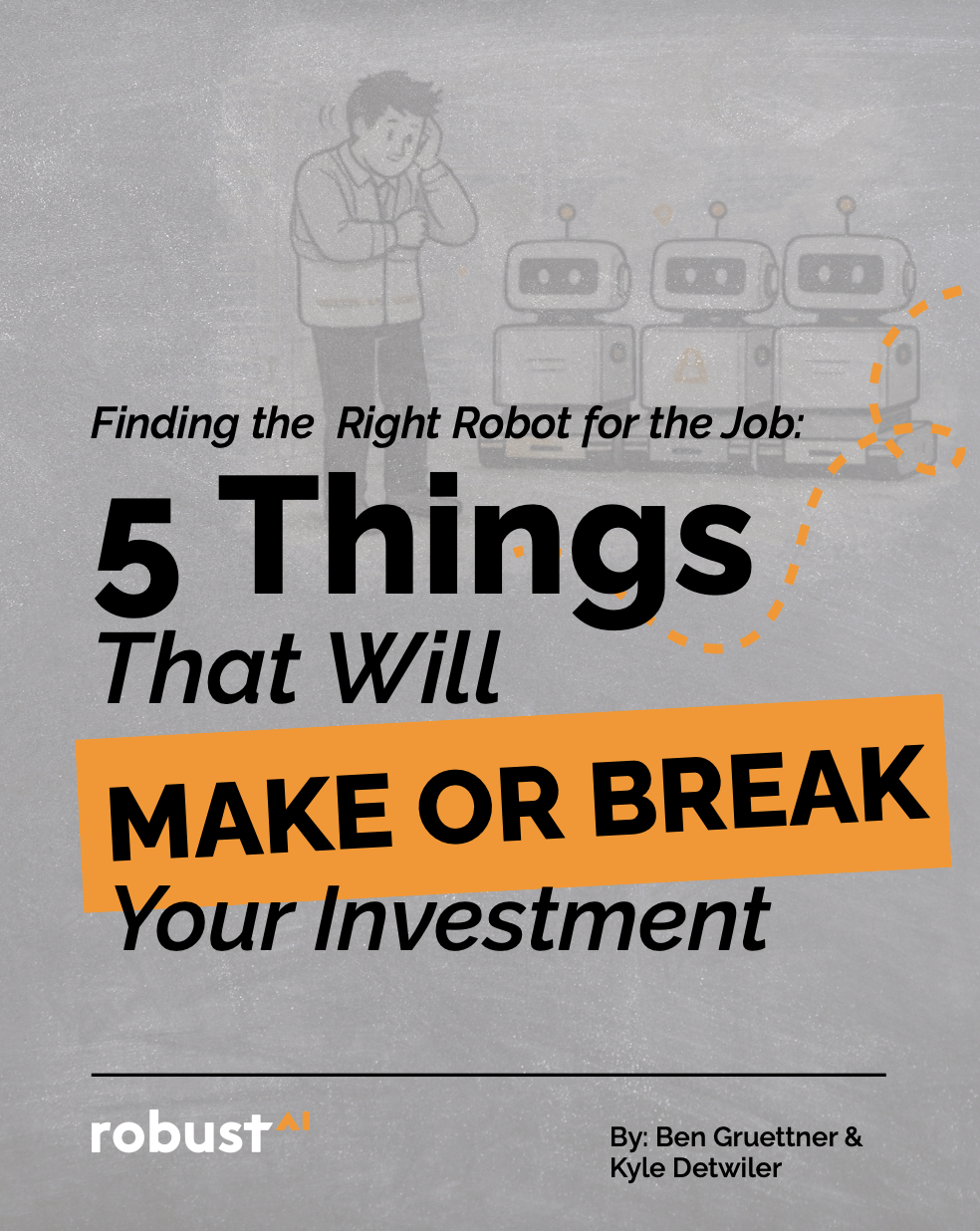
Finding the Right Robot
The goal is to eliminate inefficiencies, not automate them. 💥
Any tech for the sake of having tech doesn’t get very far if it isn’t all about the business challenge, the given circumstances of a space, and the people making an operation happen.
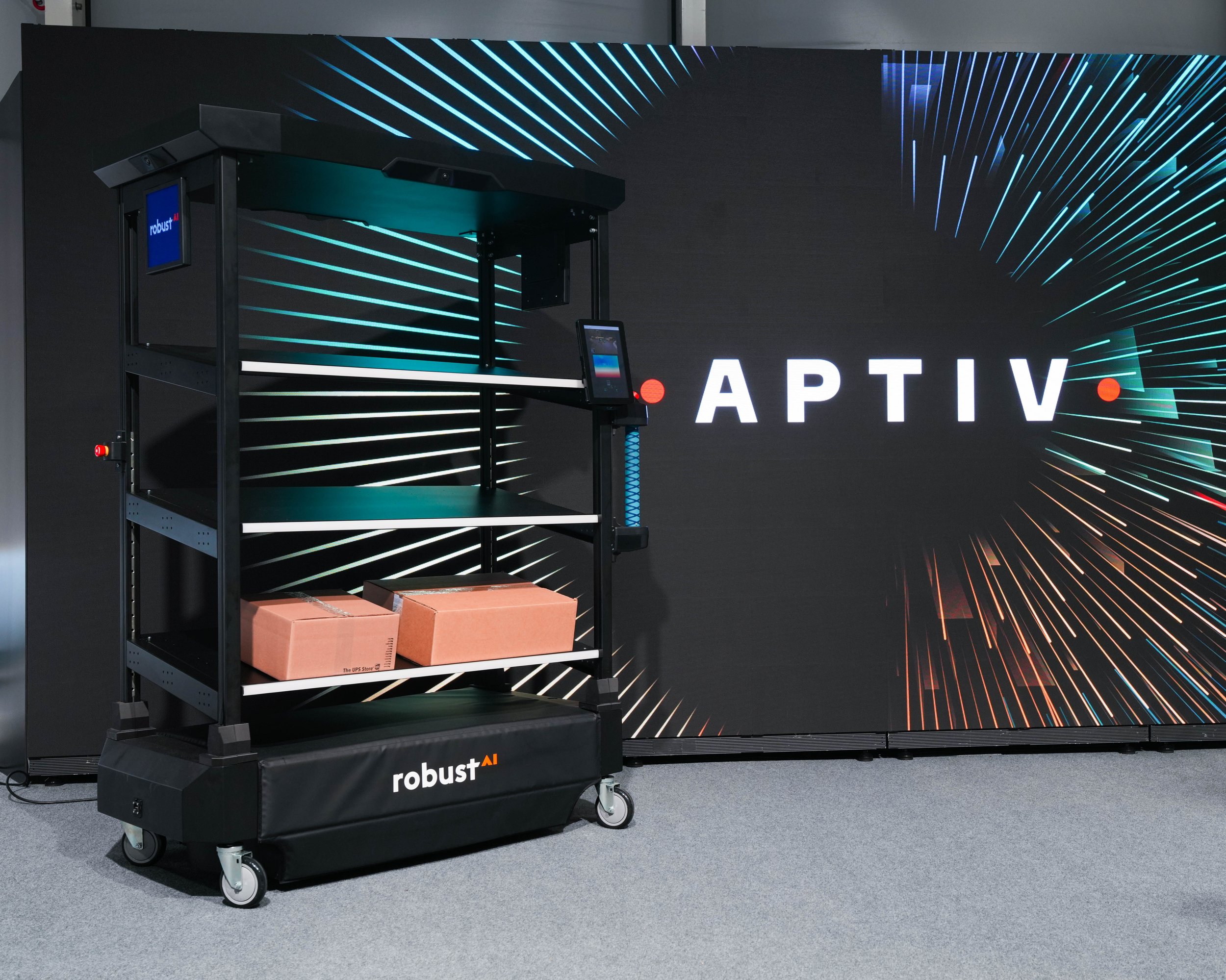
Aptiv partnership: Carter at CES
Celebrating the Robust.AI + Aptiv partnership at CES 2026 in Las Vegas
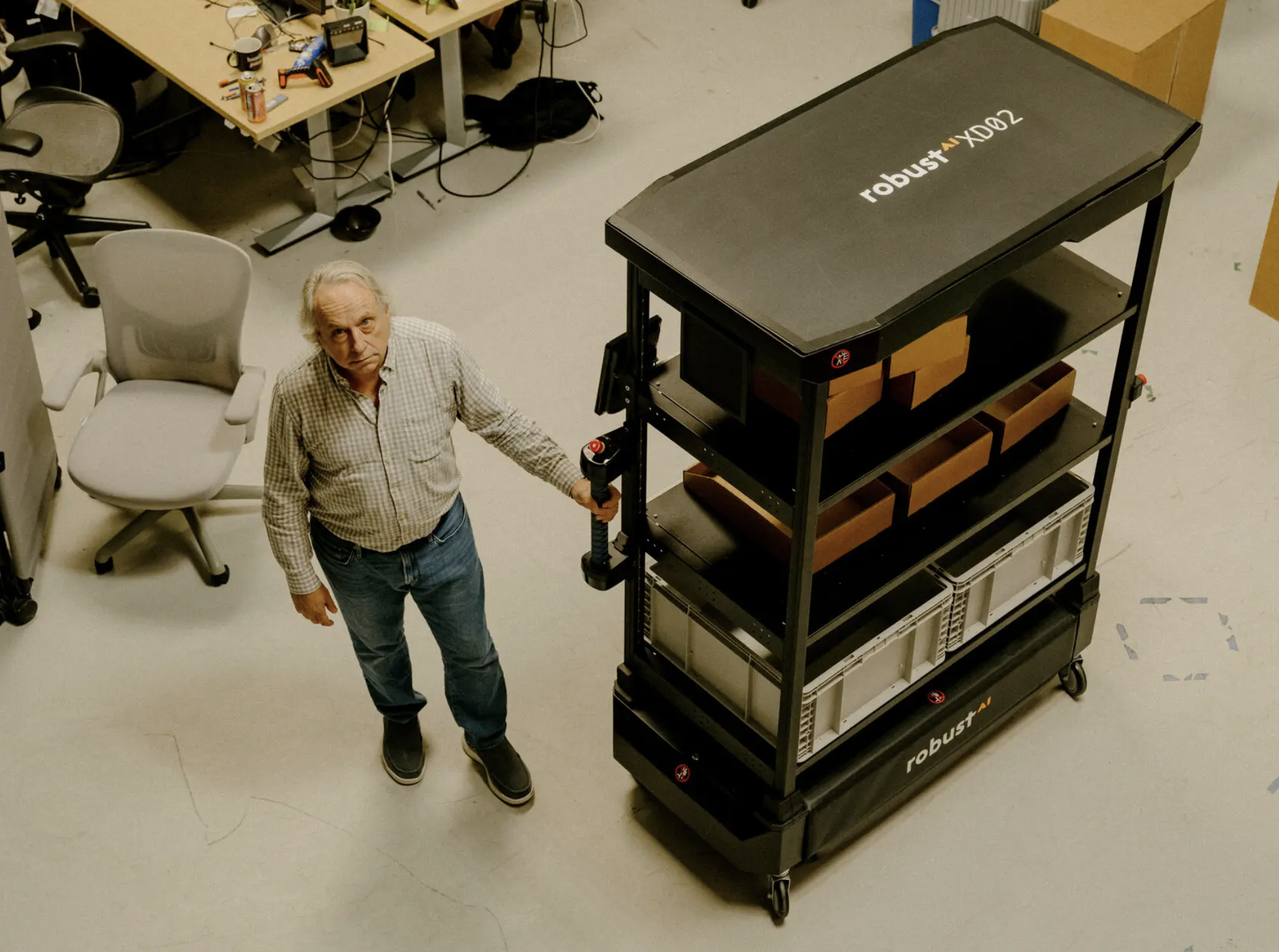
Rodney Brooks NYT Feature: He’s the Godfather of Modern Robotics. He Says the Field Has Lost Its Way.
“I like to look at what everyone is doing, find some common thing that they’re all assuming implicitly,” Rodney Brooks said, “and negate that thing.”
Rodney Brooks: Predictions Scorecard, 2026
Rodney’s eighth annual update concerning (1) self driving cars, (2) robotics, AI , and machine learning, and (3) human space travel. His plan being to review at the start of the year every year until 2050 (following his 95th birthday). The idea was to hold himself accountable for those predictions. How right or wrong was he this time?
Anthony Jules on Robot Talk: Collaborating with industrial robots
Hear what our Co-Founder and CEO Anthony Jules has to say about living and breathing the ‘Robots for People life’ on the Robot Talk Podcast!
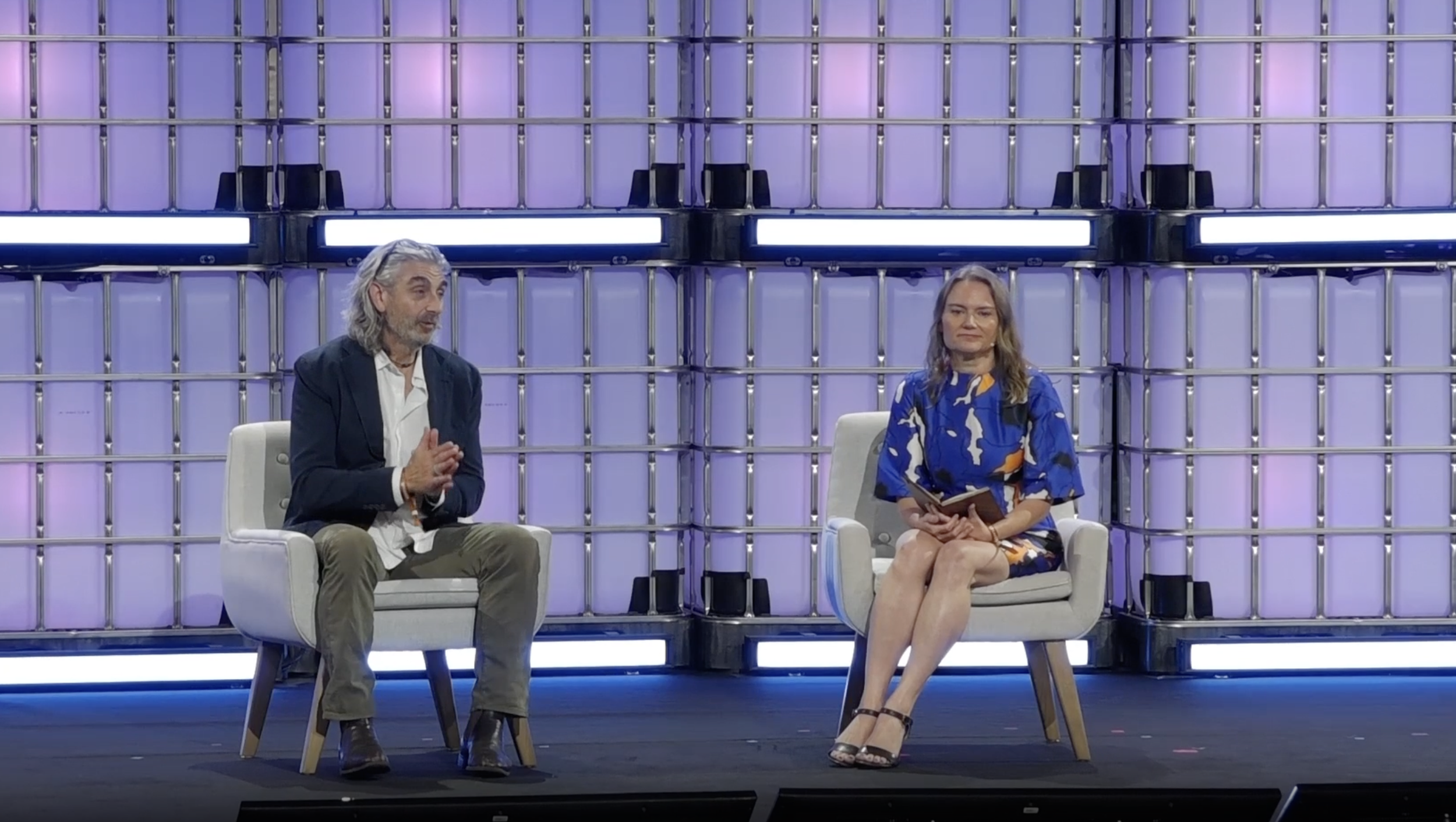
Web Summit 2025: The state of robotics, reshoring and more with John Spinale
Join our very own John Spinale as he discusses the current state of robotics, Amazon, Waymo, safety, reshoring, and more at this year’s Web Summit in Lisbon.
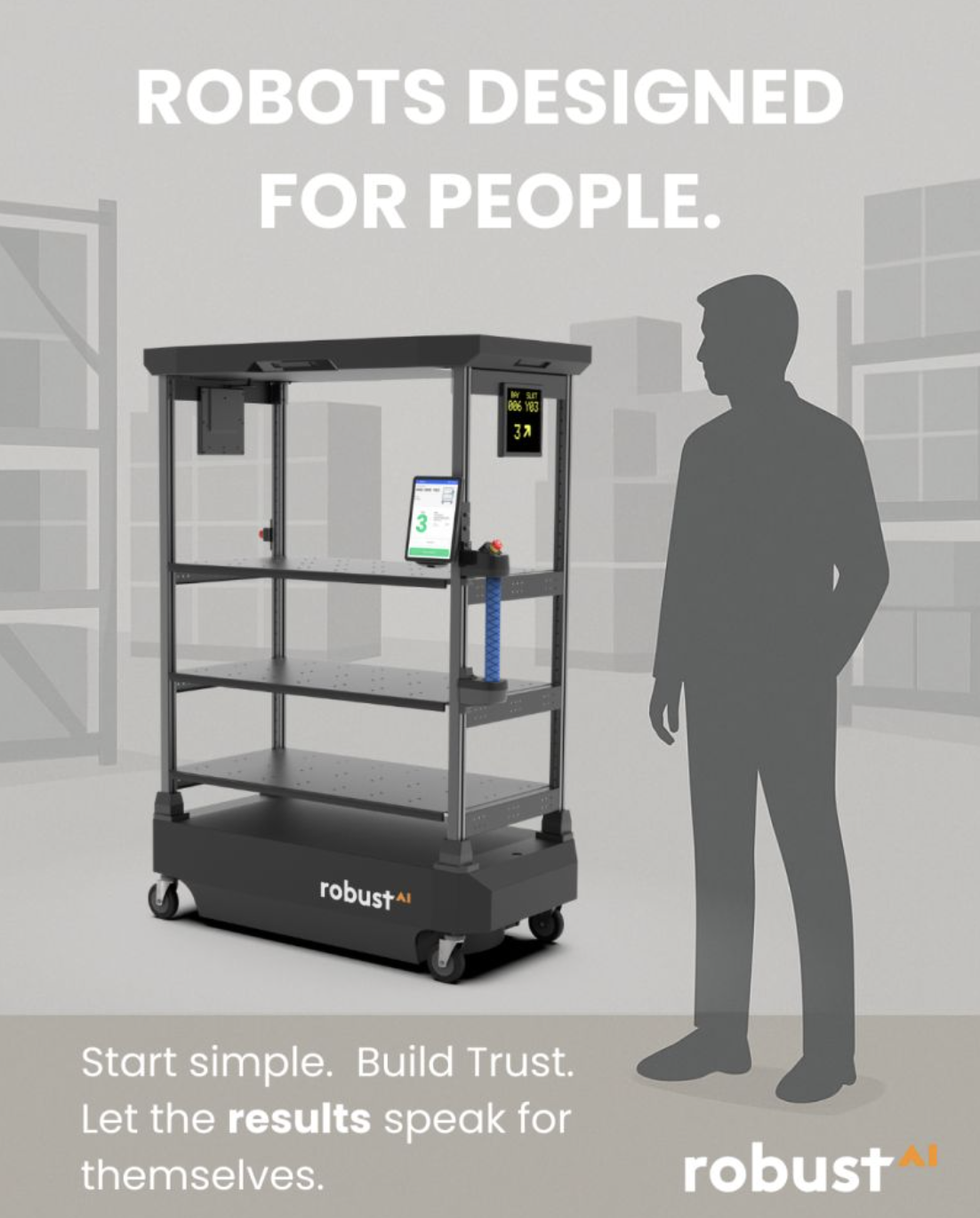
Stories from the Field: From Skepticism to Trust in the Warehouse
“For the first time, I feel like automation is working with us—not at us.”
Because we started small, the team had the chance to build trust with the technology. They saw productivity gains in real time—without disruption.
And later, when it came time to integrate fully, it was their choice. On their terms.
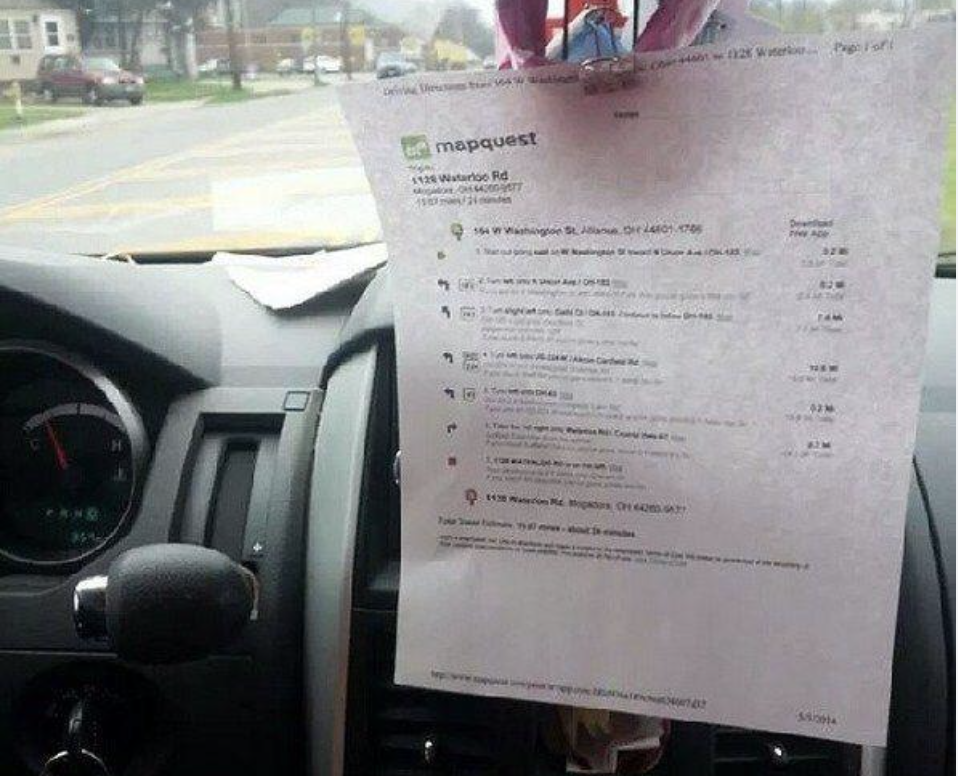
You can’t afford static solutions for picking operations
Running your warehouse with robots that “get lost” is like trying to navigate with MapQuest in a world built on Google Maps. You need solutions that adapt in real time to floor conditions, integrate seamlessly into operations, and maximize every worker’s productivity.
The Timeline Problem in Warehouse Robotics
Sometimes, the fastest payback isn’t the best payback. That’s where de-risking comes into play. De-risking the path to real results - ensuring automation improves worker productivity from day one while building toward long-term operational resilience - brings quick wins and responsible growth onto the same playing field.

Is your warehouse tracking the right numbers?
The real ROI isn’t robots per worker. It’s work per robot.
Director of Solutions, Kyle Detwiler explains why “how many robots” shouldn’t be your first question.
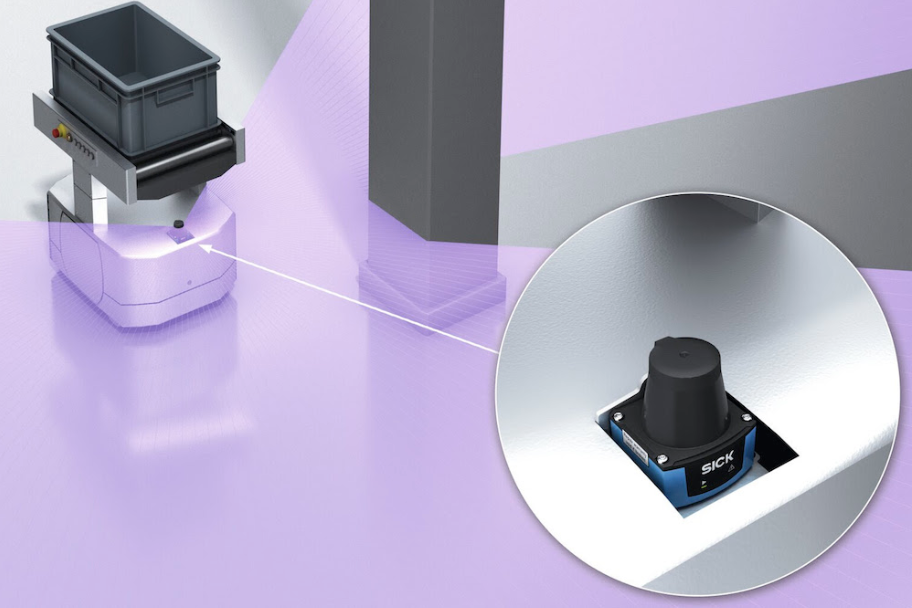
AMRs Way Back in 2020
No deployed AMRs in 2020 were using pure vision methods – all relied on LIDARs. At Robust.AI we are now deploying pure vision based SLAM driven AMRs, and the act of doing that enables a whole buffet of almost free lunches.

Inside Robust.AI’s Vision for Human-Centric Robotics: How Carter™ Is Reinventing Warehouse Productivity
In an exclusive interview with ROBOTICS BUSINESS NEWS, Ben discusses how Carter™ pioneers a new era in warehouse automation - with measurable productivity gains and without the need for hardware overhauls. Get insights on the innovations driving Carter’s success, expansion at DHL, and how the recent funding round is shaping the future of collaborative robotics in the supply chain and beyond.

Rodney Brooks on Parallels between Generative AI and Humanoid Robots
Generative AI and Humanoid Robots. What are the similarities between these two “application areas?” How has the hype around them evolved? And why did the hype develop in the first place?
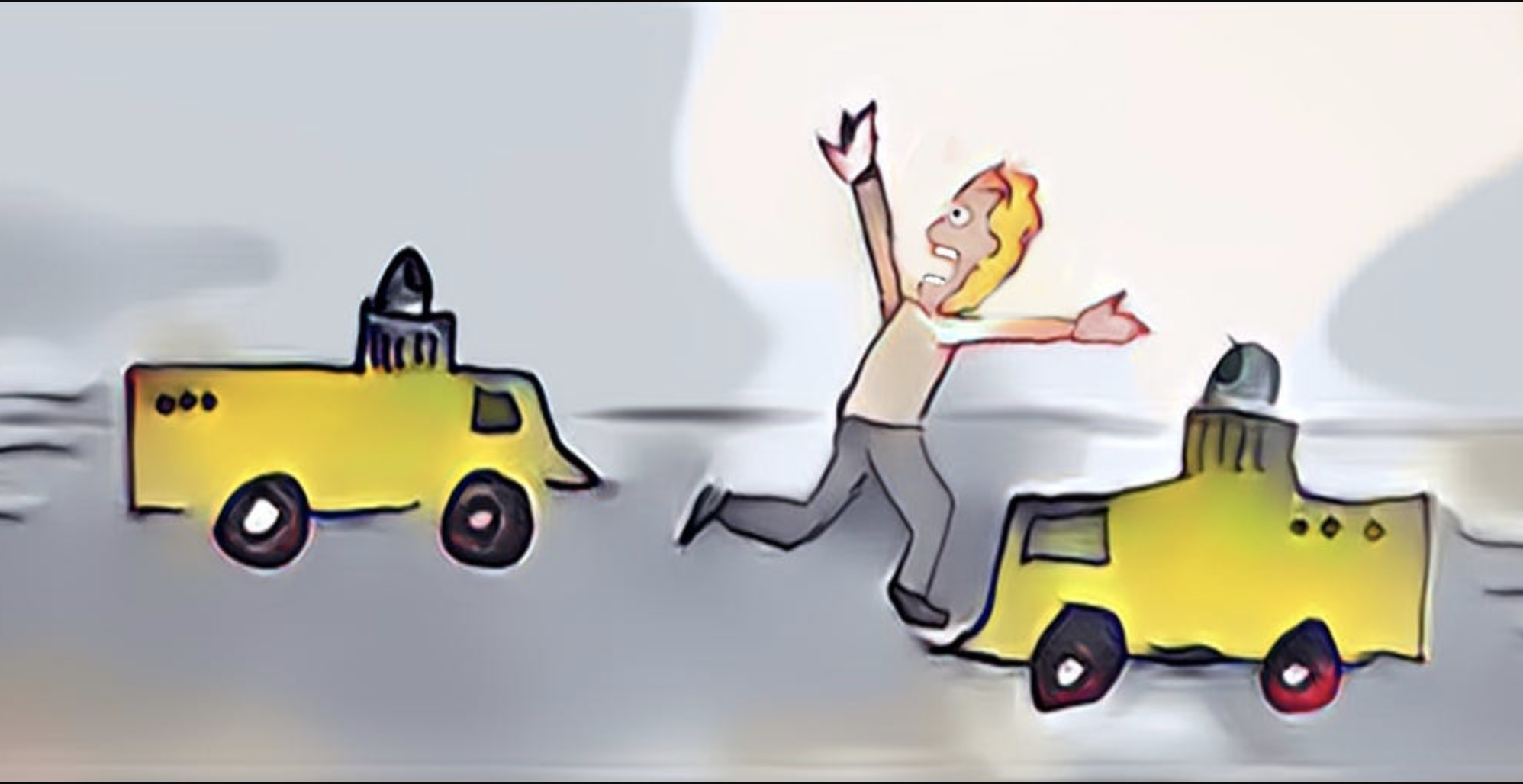

Three Laws of Robot Design
These three laws of robot design — set the proper expectations and deliver on them; it's not about things, it's about people; and design for teamwork — are the key to making a transition to happier employees, more productive operations and more satisfied customers.
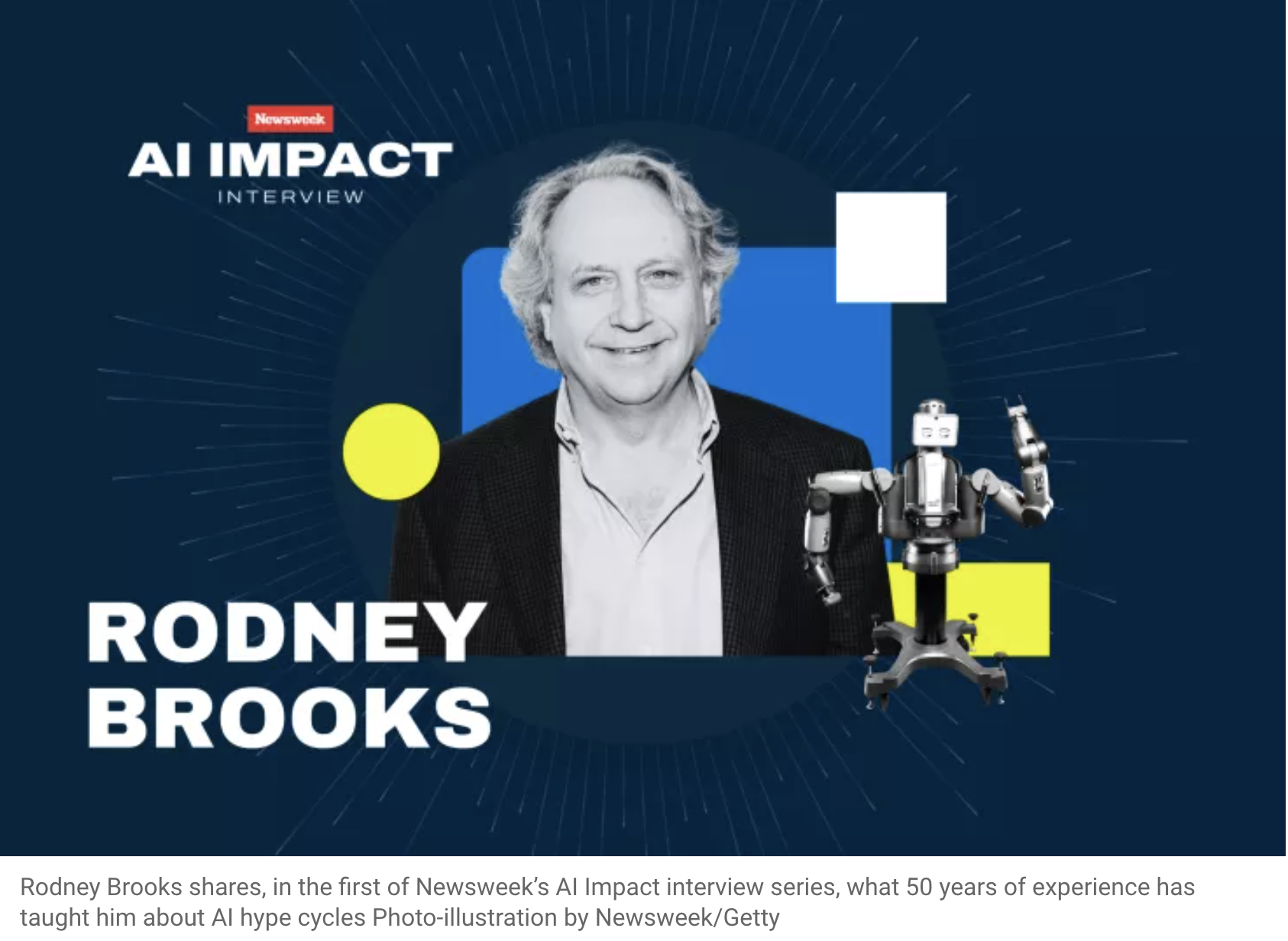
The Myth Buster: Rodney Brooks Breaks Down the Hype Around AI for Newsweek ‘AI Impact’
“The future Brooks envisions might arrive more slowly than breathless headlines suggest, but it will likely transform our world more fundamentally than we expect—a phenomenon known as Amara's Law that says that "we tend to overestimate the effect of a technology in the short run and underestimate the effect in the long run." The key is to maintain perspective, focusing on genuine value rather than hype.”

RobustAI and Carter™ featured in TechCrunch
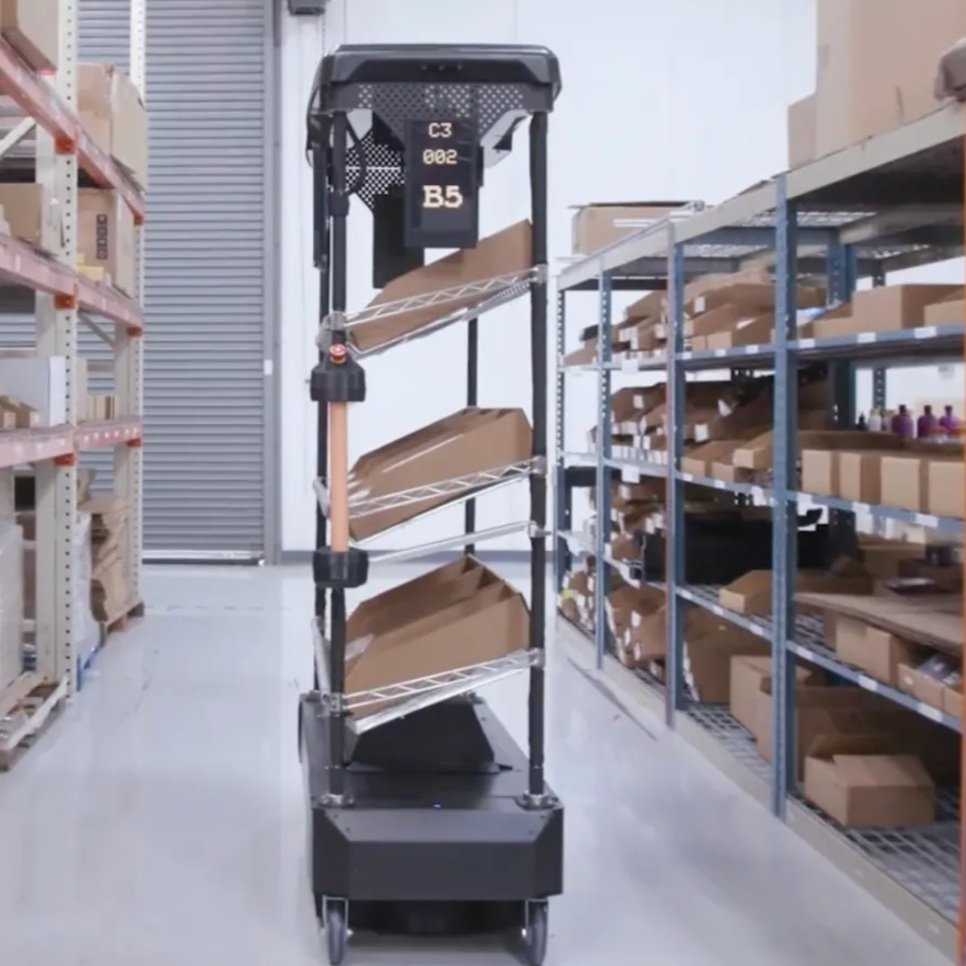
RobustAI and Carter™ featured on TechCrunch, highlighting collaboration, safety, and human-centered robot design.
“While plenty of column space has been devoted to a future in which humanoid and other robots have entirely replaced their human counterparts, that’s a distant vision, at best. People and robots are going to be working side by side for the foreseeable future, so it’s important to ensure we can do so safely.”